Saturday, February 28, 2026

Harsh Treatment of Colonists Leads to American Revolutionary War

The roots of the Revolutionary War can be traced to just after the French and Indian War that lasted from 1754 to 1763, in which the American colonists fought alongside British troops against the French and hostile Native American tribes, who controlled a large area of the interior of North America.

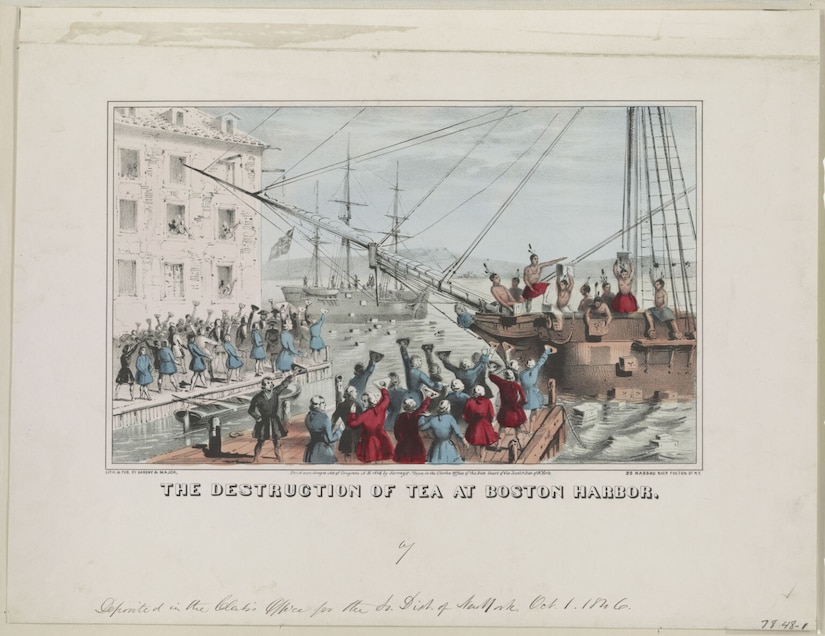
A painting depicts Native Americans throwing boxes overboard from a sailing vessel in a harbor as people on a dock watch, arms raised over their heads.

Britain's victory dramatically expanded its territory in North America, as far west as the Mississippi River, but massive war debt led to new taxes and policies that fueled discontent among the American colonists, contributing to the Revolutionary War. 

The Sugar Act, passed by Parliament in 1764, taxed molasses that was used to flavor food and distill rum. The purported purpose of the tax was to pay for expenses related to British troops defending the colonies during the French and Indian War. The various tax acts that followed in the years ahead also used this as justification.

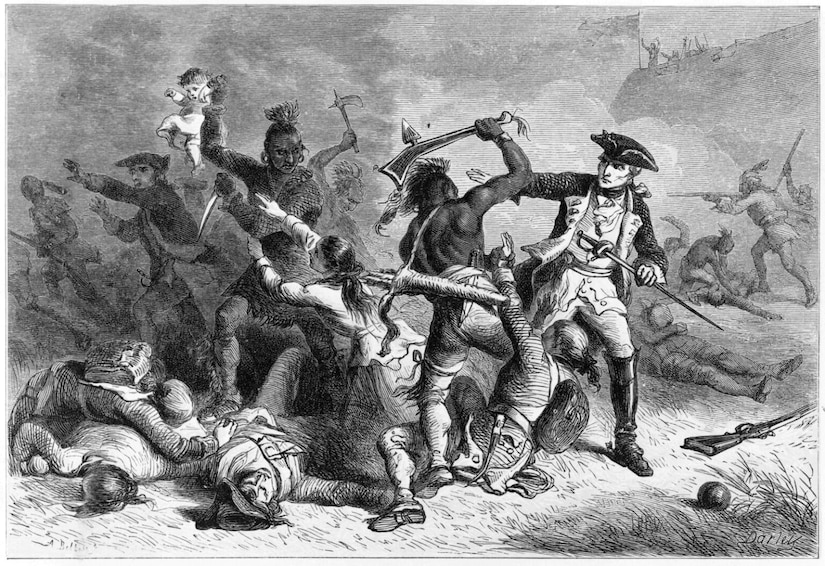
An engraving is shown depicting men in military uniforms armed with guns and swords attacking Native Americans armed with tomahawks.

In 1765, Parliament imposed a tax on all printed material produced in the colonies.  

The tax was especially disliked because it was imposed without their consent, leading to the slogan: "No taxation without representation."  

The tax was repealed March 18, 1766, due to colonists boycotting British goods, which hurt trade. 

In 1766, Parliament enacted a series of taxes known as the Townshend Act, named for the British politician who championed its passage. 

A few years later, in 1773, Parliament passed the Tea Act, which was designed to prevent Americans from smuggling tea from other nations for a lower price than from Britain's East India Company. 

In Boston, Dec. 16, 1773, colonists boarded English tea ships in the harbor and tossed boxes of tea overboard in protest. This became known as the Boston Tea Party.

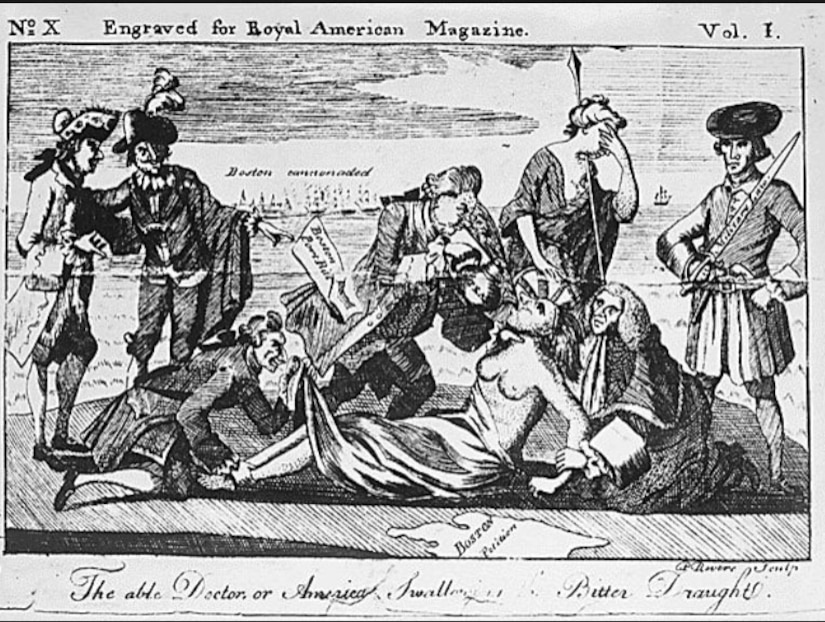
A woman sits on the ground with her breasts exposed while another woman standing over her covers her face with her left hand. Two men in colonial attire hold the woman down as another man in similar attire pours alcohol in her mouth. Three other men in similar attire stand watching.

The punitive laws passed by Britain in 1774 against Massachusetts in retaliation for the Boston Tea Party became known as the Intolerable Acts. Parliament hoped to make an example of that colony by taking away its right of self-government. However, it had the opposite effect, enraging all 13 colonies. 

Parliament passed the Quebec Act that same year, which extended that province's boundaries south into what is now Illinois, Indiana, Michigan, Minnesota and Wisconsin. Among other things, this act voided some of the colony's western land claims, areas they had helped conquer during the previous war.

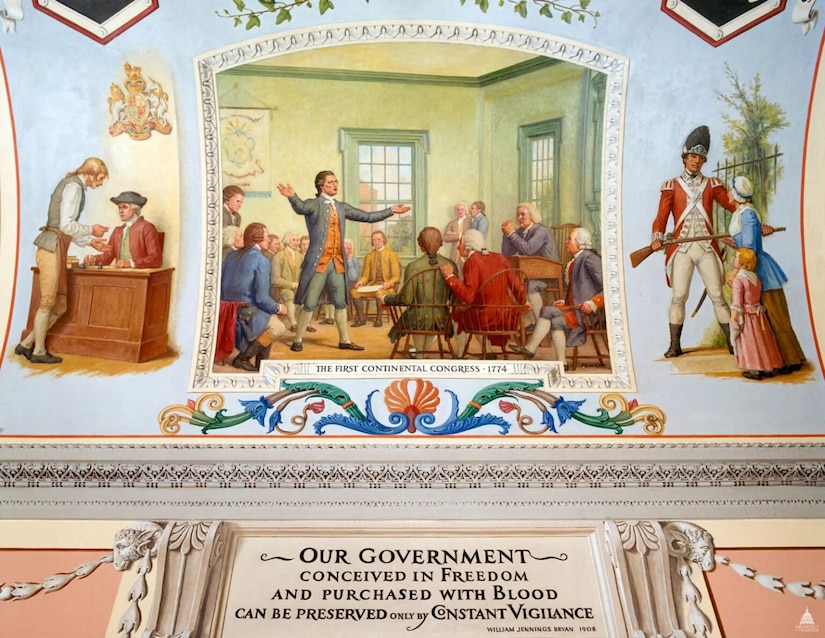
A mural is shown depicting a man in colonial attire standing in front of a small desk where another man in similar attire is seated. In the center of the mural, a man in colonial attire stands with outstretched arms while speaking to other seated men in similar attire. On the right side of the mural, a man in a military uniform with a gun faces a woman and a small girl in colonial attire.

As a result of this and previous acts, the colonists, who now referred to themselves as patriots, organized the First Continental Congress, held from Sept. 5 to Oct. 26, 1774, in Philadelphia to coordinate protests.

The delegates drew up a petition to King George III, pleading for him to rectify their grievances and repeal the Intolerable Acts.

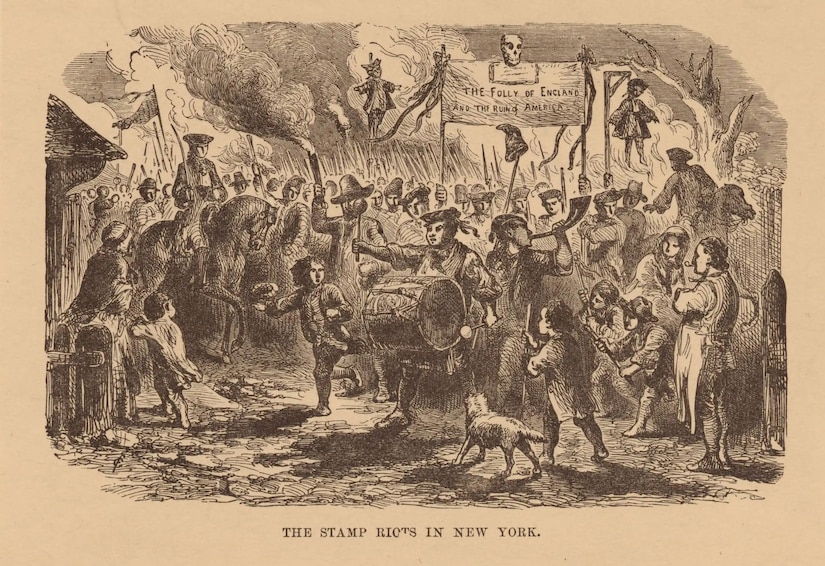
A wood engraving of a group of people in colonial attire engaging in a chaotic scene holding torches as a man beats a drum and another man in a military uniform on a horse wields a sword.

The appeal was unsuccessful, leading the delegates to convene the Second Continental Congress in Philadelphia in May 1775. The purpose of this gathering was to organize the defense of the colonies, as the Revolutionary War had already started April 19, 1775, with the Battles of Lexington and Concord.

Friday, February 27, 2026

Dirty Yes: Why Lodges Decline Quietly

Harmony, Organizational Silence, and Institutional Erosion in Freemasonry

The decline of Freemasonry in the United States during the latter half of the twentieth century has been well documented. Membership reached its peak in the late 1950s, exceeding four million members, and has steadily decreased since that time (Tabbert, 2005; Morris, 2006). Scholars have largely attributed this contraction to broader sociocultural transformations, including suburbanization, generational shifts, secularization, increased leisure competition, and the general erosion of civic participation (Putnam, 2000; Skocpol, 2003). Freemasonry’s trajectory parallels that of many other voluntary fraternal and civic associations during the same period.

While structural and demographic explanations account for much of this decline, they do not fully explain why some lodges adapted successfully while others stagnated under similar external pressures. This essay proposes “Dirty Yes Theory” as a supplementary interpretive framework. The theory suggests that lodges may decline quietly when internal cultures overvalue harmony and inadvertently discourage candid engagement. In such environments, agreement persists, but conviction diminishes. This dynamic does not initiate decline, but it may accelerate institutional erosion by weakening adaptive capacity.

Harmony in Masonic Culture

Harmony occupies a central place in Masonic practice. Ritual order depends upon it, lodge decorum protects it, and the Trowel symbolically reinforces it as the instrument that spreads the cement of brotherly love. Historically, Freemasonry has emphasized harmony as essential to its continuity and identity (Hamill, 2010; Jacob, 1991). The maintenance of decorum ensures the preservation of tradition and the dignity of the Craft.

However, harmony can function as a double-edged virtue. In operative masonry, the trowel is used to spread mortar between properly prepared stones so that they adhere securely. When the stones have been accurately squared and aligned, mortar fills minor gaps and strengthens the structure. Yet the same instrument can be misapplied. Excess mortar may be used to conceal chipped edges or compensate for stones that have not been sufficiently worked. In such cases, the wall may appear smooth and unified, while structural weaknesses remain hidden beneath the surface.

This metaphor illuminates a potential institutional hazard. When harmony is used to bind well-formed consensus, it strengthens the lodge. When harmony is used to conceal unresolved disagreement or unexamined assumptions, it masks misalignment rather than correcting it. The external appearance of unity may remain intact even as internal vitality declines.

Organizational Silence and Defensive Routines

Organizational research provides conceptual tools for understanding this dynamic. Morrison and Milliken (2000) describe “organizational silence” as a collective phenomenon in which members withhold concerns because they believe speaking up is ineffective or risky. Over time, silence becomes normalized, and institutions lose critical feedback mechanisms necessary for adaptation.

Similarly, Argyris (1991) identifies “defensive routines” as patterns of behavior that protect individuals and organizations from discomfort while preventing the examination of underlying assumptions. In such environments, discussions may remain civil and orderly, yet significant issues are deferred or avoided. The absence of open conflict does not indicate institutional health; rather, it may indicate a reluctance to surface tension.

Freemasonry’s hierarchical ritual structure, which properly emphasizes respect for the East and orderly conduct, may unintentionally intensify this dynamic if harmony is interpreted as the avoidance of disagreement rather than the cultivation of trust. When members perceive that objections are unlikely to alter outcomes, they may rationally conserve effort. Detert and Edmondson (2011) describe these internalized calculations as “implicit voice theories,” whereby individuals determine when speaking up is worthwhile.

In such circumstances, members may continue to vote affirmatively, accept offices, and participate in ritual, while privately disengaging from deliberative processes. This pattern constitutes what may be termed a “dirty yes”: agreement that preserves decorum but lacks full alignment or conviction.

Civic Decline and Quiet Withdrawal

Robert Putnam (2000) observes that the decline of American civic associations often occurred not through dramatic conflict but through gradual disengagement. Participation diminished incrementally. Members attended less frequently, volunteered less enthusiastically, and invested less emotional energy. Institutions did not collapse abruptly; they thinned over time.

Theda Skocpol (2003) similarly argues that many federated membership organizations weakened when members transitioned from active participants to passive consumers of institutional life. Engagement shifted from co-creation to compliance.

Dirty Yes Theory aligns with these observations. When members repeatedly agree without substantive engagement, institutional vitality gradually erodes. Officers may accept positions out of obligation rather than enthusiasm. Programs may continue by inertia rather than innovation. Younger members may observe deference rather than dialogue and infer that dissent is unnecessary or unwelcome.

The resulting pattern is not fracture but attrition. The lodge remains procedurally stable while its adaptive capacity diminishes.

Ritual Conservatism and Adaptive Capacity

Freemasonry’s ritual continuity has historically provided resilience and identity across centuries (Jacob, 1991; Hamill, 2010). However, tradition without interpretive renewal risks becoming mechanical. When educational programming stagnates or leadership approaches remain unexamined, adaptation to generational change becomes difficult.

Dirty Yes Theory does not suggest that ritual conservatism caused Masonic decline. Rather, it proposes that when harmony discourages critical evaluation of programming, recruitment strategies, or member engagement practices, opportunities for renewal may be missed. Under such conditions, external pressures compound internal inertia.

The misuse of harmony, like excessive mortar, can temporarily preserve surface cohesion. Yet concealed misalignment eventually reveals itself when stress increases—whether through demographic contraction, financial strain, or leadership transition.

Limits and Scope of the Theory

It is essential to clarify the limits of this argument. Demographic shifts, cultural secularization, increased leisure competition, and broader civic disengagement remain primary explanatory factors in the decline of Freemasonry (Putnam, 2000; Skocpol, 2003; Tabbert, 2005). Dirty Yes Theory does not replace these structural explanations.

Rather, it offers a supplementary lens for understanding why some lodges adapted successfully while others stagnated under similar external conditions. Where members felt empowered to engage in candid yet respectful deliberation, adaptation may have been more likely. Where harmony was equated with unanimity, innovation may have been deferred.

Conclusion

Freemasonry teaches that harmony strengthens the lodge. When harmony arises from trust, candor, and disciplined respect, it binds stones securely into structure. However, when harmony is preserved at the expense of honest deliberation, it may conceal misalignment rather than correct it.

Dirty Yes Theory proposes that lodges decline quietly when agreement substitutes for engagement and decorum substitutes for conviction. In such environments, unanimity may increase even as vitality diminishes. Decline does not manifest through open conflict; it emerges through gradual disengagement.

The question for any lodge, therefore, is not whether votes pass unanimously. It is whether that unanimity reflects authentic alignment or cautious compliance. Just as mortar should bind well-worked stones rather than conceal unfinished ones, harmony should unite candid brethren rather than suppress necessary friction.

Institutional strength depends not on the absence of disagreement, but on the presence of trust sufficient to sustain it.

References

Argyris, C. (1991). Teaching smart people how to learn. Harvard Business Review, 69(3), 99–109.

Detert, J. R., & Edmondson, A. C. (2011). Implicit voice theories: Taken-for-granted rules of self-censorship at work. Academy of Management Journal, 54(3), 461–488. https://doi.org/10.5465/amj.2011.61967925

Hamill, J. (2010). The Craft: A history of English Freemasonry. Crucible.

Jacob, M. C. (1991). Living the Enlightenment: Freemasonry and politics in eighteenth-century Europe. Oxford University Press.

Morris, S. B. (2006). The complete idiot’s guide to Freemasonry. Alpha.

Morrison, E. W., & Milliken, F. J. (2000). Organizational silence: A barrier to change and development in a pluralistic world. Academy of Management Review, 25(4), 706–725.

Putnam, R. D. (2000). Bowling alone: The collapse and revival of American community. Simon & Schuster.

Skocpol, T. (2003). Diminished democracy: From membership to management in American civic life. University of Oklahoma Press.

Tabbert, M. A. (2005). American Freemasons: Three centuries of building communities. New York University Press.
Monday, February 16, 2026

If We Don’t Initiate Our Men, the Internet Will

When institutions abandon the work of forming men, unstructured digital tribes will eagerly take their place.

Introduction

Across the United States, young men between the ages of 21 and 35 are drifting—economically, socially, and psychologically. Labor force participation among prime-age men has declined for decades (Autor & Dorn, 2013; Council of Economic Advisers, 2016). Women now surpass men in college enrollment and completion (Parker & Horowitz, 2023). Young men report rising loneliness and fewer close friendships than previous generations (Cox, 2021). Trust in institutions is weakening (Pew Research Center, 2022).

The dominant explanation offered in public discourse is a vague “crisis of masculinity.” But that diagnosis is incomplete. What we are witnessing is not merely confusion about masculinity; it is the collapse of structured initiation. When societies fail to initiate their men into disciplined adulthood, initiation does not disappear. It relocates. And in the absence of embodied institutions, the internet becomes the initiator.

The Structural Nature of the Drift

Developmental psychologist Jeffrey Arnett (2000) describes “emerging adulthood” as a prolonged period of identity exploration. Historically, that exploration was stabilized by rites of passage: apprenticeship systems, religious confirmation, military service, fraternal orders, and civic responsibility.

Today, many of those institutions have weakened. Deindustrialization has destabilized traditional male labor pathways (Autor & Dorn, 2013). Civic associations have declined sharply (Putnam, 2000). Intergenerational mentorship structures have thinned.

What remains is an extended adolescence with minimal ritualized transition into responsibility. Without initiation, identity formation becomes improvisational.

Digital Initiation

Research on online radicalization demonstrates how algorithmic systems amplify grievance-based content and reinforce identity loops (Ribeiro et al., 2020). Isolated young men searching for belonging encounter communities that offer:

  • Clear hierarchies
  • Shared enemies
  • Simplified narratives
  • Ritualized language
  • Belonging through opposition

These are not random features. They are initiation substitutes. Where there is no elder to confer discipline, an influencer confers ideology. Where there is no ritual to dramatize responsibility, there is digital spectacle to dramatize outrage. The internet does not initiate toward maturity. It initiates toward reaction.

The Role of Social Capital

Robert Putnam (2000) demonstrated that voluntary associations generate social capital—networks of trust and reciprocity that stabilize civil society. As these associations decline, isolation rises.

Cox (2021) reports a significant increase in young men who report having few or no close friends. Loneliness is not merely emotional discomfort; it is vulnerability to identity capture. Initiation has always been communal. It requires witnesses, accountability, and repetition. Digital life offers visibility without accountability and community without obligation. The result is belonging without discipline.

Freemasonry as Counter-Initiation

Freemasonry retains a formal initiation system in an era that has largely abandoned them. Its degrees dramatize moral birth, obligation, and progressive growth. Advancement is structured. Responsibility precedes authority. Brotherhood is embodied, not virtual.

Within Lodge life, initiation includes:

  • Public obligation
  • Moral instruction through allegory
  • Intergenerational mentorship
  • Regular ritual assembly

These elements correspond to what developmental and sociological research identifies as stabilizing structures.

Arnett (2000) emphasizes identity exploration; Masonry adds identity commitment. Mahalik et al. (2003) note that harmful masculine norms discourage vulnerability; Lodge ritual places men in shared humility under symbolic testing. Strength is redefined not as dominance but as self-regulation.

Civic Orientation Without Extremism

Distrust in institutions has grown across generations (Pew Research Center, 2022). When distrust meets isolation, grievance ecosystems flourish. Ribeiro et al. (2020) demonstrate how online environments can gradually guide users toward more extreme content.

Freemasonry historically directs masculine energy toward constitutional loyalty, lawful conduct, and civic responsibility. It prohibits sectarian division within its walls. It binds men across political differences through shared ethical vocabulary. It provides belonging without factionalization.

Intergenerational Continuity

Modern life often segregates generations. Young men seek advice from peers rather than elders. In Lodge culture, older men and younger men assemble regularly under shared ritual structure. Authority is modeled, not imposed. Tradition is transmitted through repetition.

Mentorship research consistently correlates cross-generational guidance with improved life outcomes. Freemasonry institutionalizes that relationship.

Limitations

Freemasonry cannot reverse automation. It cannot solve macroeconomic policy. It cannot single-handedly reform education. Institutions must be renewed internally to function effectively. But the conditions that young men lack—structured belonging, disciplined initiation, embodied brotherhood, moral testing, and civic responsibility—are precisely what Freemasonry was designed to cultivate.

Conclusion

The vacuum of initiation will not remain empty. If we do not initiate our men into responsibility, discipline, and fraternity, digital ecosystems will initiate them into grievance, spectacle, and reaction. The crisis is not that masculinity is disappearing. The crisis is that structured formation has receded. Freemasonry does not offer nostalgia. It offers construction. It reminds men that identity is not declared but built; that strength is not loud but measured; that brotherhood is not an algorithm but an obligation.

If initiation is inevitable, we must decide who will conduct it.

References

Arnett, J. J. (2000). Emerging adulthood: A theory of development from the late teens through the twenties. American Psychologist, 55(5), 469–480.

Autor, D. H., & Dorn, D. (2013). The growth of low-skill service jobs and the polarization of the U.S. labor market. American Economic Review, 103(5), 1553–1597.

Council of Economic Advisers. (2016). The long-term decline in prime-age male labor force participation.

Cox, D. (2021). The state of American friendship: Change, challenges, and loss. Survey Center on American Life.

Mahalik, J. R., Good, G. E., & Englar-Carlson, M. (2003). Masculinity scripts, presenting concerns, and help seeking. Professional Psychology: Research and Practice, 34(2), 123–131.

Parker, K., & Horowitz, J. M. (2023). In a growing share of U.S. marriages, husbands and wives earn about the same. Pew Research Center.

Pew Research Center. (2022). Public trust in government: 1958–2022.

Putnam, R. D. (2000). Bowling alone: The collapse and revival of American community. Simon & Schuster.

Ribeiro, M. H., Ottoni, R., West, R., Almeida, V. A. F., & Meira, W. (2020). Auditing radicalization pathways on YouTube. Proceedings of the ACM on Human-Computer Interaction, 4(CSCW2), 1–33.

Keywords: male initiation, masculinity crisis, freemasonry, social capital, online radicalization, brotherhood, emerging adulthood, civic stability

Saturday, February 14, 2026

The Square Is Not a Sentence: Reclaiming Symbol as Moral Measurement

Freemasonry is a symbolic system. Its tools, emblems, and ritual language are not designed to function as a fixed vocabulary or secret code. Yet one of the recurring errors in both popular and internal interpretations of Masonry is the tendency to treat its symbols as though they were elements of a literal language—stable signs with single, definitive meanings. When symbols are reduced to a lexicon, they lose their formative power. They become objects of memorization rather than instruments of transformation. The Square is not a sentence to be parsed. It is a standard by which conduct is measured.

Symbol and Meaning

A symbol differs fundamentally from a word in a technical language. In semiotic theory, a sign may function as a conventional marker, but a symbol operates through depth, resonance, and layered meaning (Eco, 1976). Umberto Eco explains that symbols invite interpretation because they are “open” structures whose meanings are not exhausted by any single explanation (Eco, 1984). When a symbol is mistaken for a closed linguistic unit, its richness is flattened into a definition.

Paul Ricoeur argues that “the symbol gives rise to thought” (Ricoeur, 1967, p. 15). A symbol is not merely something decoded; it provokes reflection and self-examination. Its purpose is not to communicate information efficiently but to stimulate inward engagement. If Masonic symbols are treated as code—objects to decipher rather than realities to contemplate—they cease to generate thought. They become static artifacts rather than dynamic catalysts.

The Moral Function of Masonic Symbolism

Freemasonry emerged from a long tradition of initiatory and symbolic instruction. Albert Pike described Masonic symbols as invitations to philosophical inquiry rather than dogmatic statements. He wrote that the ceremonies are “not the reading of an essay, but the opening of a problem, requiring research” (Pike, 1871/2005, p. 21). This framing is essential. The symbol is a problem posed to the initiate, not a sentence to be memorized.

Mircea Eliade’s work on symbolism reinforces this point. He observes that symbols in traditional societies function to orient the individual within a moral and cosmological order (Eliade, 1959). They are not simply explanatory devices but existential guides. The loss of symbolic understanding, Eliade argues, contributes to spiritual disorientation. When the Square is treated as a definition rather than a discipline, its orienting power diminishes.

The Square, in operative architecture, measures right angles. In speculative Masonry, it measures conduct. To reduce it to a statement—“the Square means morality”—is to substitute abstraction for action. As Aristotle argued, moral excellence is not acquired by knowing definitions but by repeated practice (Aristotle, trans. 2009). A man becomes just by doing just acts, not by reciting the meaning of justice. Likewise, the Mason becomes upright not by articulating the symbolic meaning of the Square, but by submitting his behavior to its measure.

The Danger of Literalism

Literalism offers intellectual comfort. It provides certainty. In symbolic systems, however, certainty often signals reduction. Ernst Cassirer noted that human beings are “symbolic animals” who construct meaning through forms that transcend mere linguistic description (Cassirer, 1944). When symbols are collapsed into literal propositions, their formative role in shaping consciousness is undermined.

In the context of Freemasonry, literalism produces several distortions. First, it encourages dogmatism. If a symbol has one fixed meaning, disagreement becomes deviation. Second, it shifts attention from ethical application to speculative mastery. One may pride himself on knowing the “true meaning” of a symbol while neglecting its demands upon his character. Third, it fosters esoteric elitism. When symbols are treated as hidden codes, the emphasis shifts from moral construction to secret knowledge.

Ricoeur’s hermeneutics warns against this reduction. He argues that interpretation must preserve the surplus of meaning within the symbol (Ricoeur, 1976). The symbol’s power lies precisely in its inexhaustibility. When a Mason insists that the Square “means” one thing and one thing only, he closes the very space in which reflection and growth occur.

Construction Versus Codification

Freemasonry frequently speaks of building—of erecting a temple not made with hands. Construction implies labor, measurement, correction, and refinement. Codification implies classification and cataloging. These are not the same enterprise. To construct character is an ethical discipline; to codify symbols is an intellectual exercise.

Aristotle’s insistence that virtue is formed through habituation (Aristotle, trans. 2009) aligns with the constructive model. The Square functions not as a linguistic statement but as a moral instrument. It confronts the Mason with a question: does this action align with a fixed standard? The answer is not found in a dictionary but in conduct.

Cassirer’s philosophy of symbolic forms reminds us that symbols shape reality rather than merely describe it (Cassirer, 1944). When the Square is treated as an active form shaping behavior, it fulfills its purpose. When it is treated as a sentence to be parsed, it becomes inert.

Reclaiming the Symbol

To reclaim Masonic symbolism is to restore its moral centrality. The initiate must resist the temptation to reduce the Craft to hidden language. Symbols are not passwords; they are principles embodied in image and tool. They demand application.

Eliade reminds us that authentic symbolism reorients the individual toward meaning (Eliade, 1959). The Square reorients the Mason toward rectitude. Its work is accomplished not when its meaning is explained, but when its standard is lived.

Conclusion

The Square is not a sentence. It does not exist to be translated into a tidy moral definition. It exists to measure. When Masonic symbols are mistaken for language, the Craft risks becoming an intellectual game rather than a discipline of character. Symbolic understanding requires humility, reflection, and practice. It requires that the initiate submit himself to the tool rather than master it as a code.

The health of Freemasonry depends upon remembering that its symbols are instruments of construction. They are not vocabulary to be recited but standards to be applied. In reclaiming the Square as moral measurement rather than linguistic statement, the Mason returns to the essential labor of the Craft: building the temple within.

References

Aristotle. (2009). Nicomachean ethics (W. D. Ross, Trans.). Oxford University Press. (Original work published ca. 350 B.C.E.)

Cassirer, E. (1944). An essay on man: An introduction to a philosophy of human culture. Yale University Press.

Eco, U. (1976). A theory of semiotics. Indiana University Press.

Eco, U. (1984). Semiotics and the philosophy of language. Indiana University Press.

Eliade, M. (1959). The sacred and the profane: The nature of religion (W. R. Trask, Trans.). Harcourt.

Pike, A. (2005). Morals and dogma of the Ancient and Accepted Scottish Rite of Freemasonry. Sacred-Texts. (Original work published 1871)

Ricoeur, P. (1967). The symbolism of evil. Beacon Press.

Ricoeur, P. (1976). Interpretation theory: Discourse and the surplus of meaning. Texas Christian University Press.

Harsh Treatment of Colonists Leads to American Revolutionary War

Feb. 27, 2026 | By David Vergun, Pentag...